Orthopedic Insights & Knowledge
Explore the latest advances in orthopedic implants, trauma solutions, surgical technology, and healthcare industry news from Auxein Medical.
2026 Best External Fixator System for Global Buyers?
Table of Contents
- Global Trauma Burden: WHO Reports 20–50 Million Road-Injury Injuries Yearly
- External Fixator Types: Uniplanar, Ring, Hybrid, and Hexapod Systems
- Device Performance: ASTM F1541 Sets Tests for External Skeletal Fixators
- Quality and Safety: ISO 13485 and ISO 14971 Buyer Checks
- 2026 Supplier Selection: Compare Clearances, Clinical Evidence, and Total Cost
- FAQS
- Conclusion
- Related Posts
Choosing the 2026 best External Fixator System is not simply a matter of comparing prices or counting components. Global buyers need to assess frame stability, pin and clamp compatibility, adjustment options, material quality, and the availability of replacement parts. A system that looks complete in a catalog may be difficult to maintain when a specific connector is unavailable locally. Small details matter.
Gavriil Ilizarov, the orthopedic surgeon associated with the development of circular fixation, is often credited with saying, “The possibilities of the human body are limitless.” That idea points to a practical responsibility: fixation equipment must support clinical judgment, not replace it. Buyers should review technical documentation, intended use, quality controls, sterilization information, and region-specific regulatory requirements. They should also ask how suppliers handle training, service, and traceability. These checks are less visible than a polished product image, but they matter.
This guide compares key purchasing considerations for hospitals, distributors, and procurement teams evaluating an External Fixator System in 2026. It looks at design, configuration, documentation, supplier support, and total ownership costs. No single system suits every case or market. And specifications can be confusing. Some buyers may still prioritize a low upfront price; that can be understandable, though it deserves a second look when spare parts and support are uncertain. The aim here is not to declare one universal winner, but to help buyers ask sharper questions before making a decision.
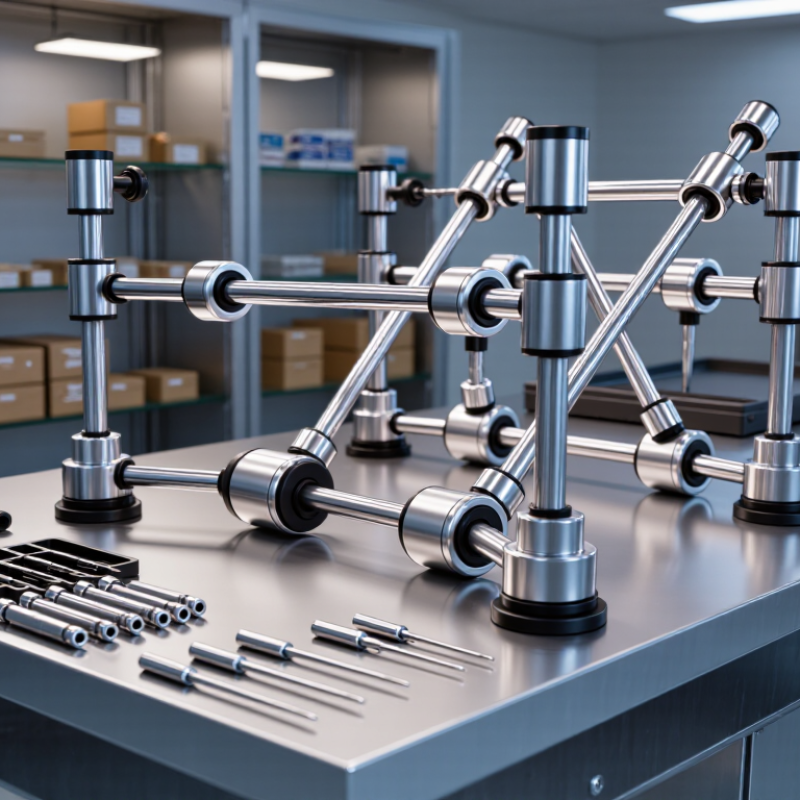
Global Trauma Burden: WHO Reports 20–50 Million Road-Injury Injuries Yearly
WHO estimates that road traffic crashes cause 20–50 million non-fatal injuries worldwide each year. Behind that range are people with open fractures, crushed limbs, and long journeys to a trauma unit. Some arrive within an hour; others wait while transport, imaging, or specialist care is arranged. The burden is real. Yet a global estimate cannot show how unevenly these injuries affect rural communities and lower-resource hospitals.
For buyers assessing an external fixator system, this context makes practical performance more important than a polished catalogue. Clinicians need dependable clamps, compatible pin options, clear assembly instructions, and instruments that withstand repeated processing. Just as important, the frame should allow wound access and imaging when clinically appropriate. Small details matter. Training, spare-part availability, packaging, and local service can shape whether a system remains usable beyond delivery day. Procurement teams should compare documented testing, material traceability, and applicable regulatory requirements, then seek feedback from trauma staff. No device removes the need for sound case selection or follow-up. That point is easy to understate.
External Fixator Types: Uniplanar, Ring, Hybrid, and Hexapod Systems
2026 Best External Fixator System for Global Buyers?
External Fixator Types: Uniplanar, Ring, Hybrid, and Hexapod Systems
External fixation is not one device category. Uniplanar systems use pins connected to a bar, offering a relatively straightforward setup for temporary or definitive stabilization. Ring fixators distribute support around the limb and can accommodate gradual correction. Hybrid systems combine rings and half-pins, often helping when fixation must balance stability with access to a joint or wound. Hexapod frames use adjustable struts for multiplanar correction. More adjustment is not automatically better.
The WHO’s Global Status Report on Road Safety 2023 estimates 1.19 million road deaths each year, alongside many more nonfatal injuries. This scale underscores the need for dependable trauma-care options, but it does not indicate which frame suits a particular fracture. Buyers should compare pin and wire options, frame weight, adjustment workflow, imaging access, training needs, and availability of replacement parts. A tidy specification sheet can still miss the realities of follow-up care. Fit matters.
Tips: Match the frame to the anatomy, soft-tissue condition, and intended treatment plan; confirm compatibility and training requirements with clinical teams. Ask for documented performance and quality data, not just catalog claims. Hexapod precision can be useful, yet it may bring a steeper learning curve. That trade-off deserves a second look.
External Fixator Types: Structural Overview for Global Buyers (2026)
A hexapod frame uses six adjustable struts to support coordinated correction in six degrees of freedom: three translations and three rotations. Other frame types are summarized below; their configurations vary, so they are not assigned a directly comparable numeric score.
The chart shows a structural feature, not clinical outcomes or a ranking. Frame choice depends on the fracture or deformity, treatment plan, and clinician expertise.
Device Performance: ASTM F1541 Sets Tests for External Skeletal Fixators
2026 Best External Fixator System for Global Buyers?
For external skeletal fixators, performance claims matter only when the test conditions are clear. ASTM F1541 provides specifications and test methods for these devices, helping buyers assess mechanical performance using a consistent framework. Request the applicable test reports, fixture configuration, sample size, and results for each relevant component. A passing result is useful, but it does not predict every clinical outcome.
Clinical evidence also deserves careful reading. A review by Kazmers, Fragomen, and Rozbruch in Strategies in Trauma and Limb Reconstruction (2016) found reported pin-site infection rates ranging from 0% to 100%. The wide range reflects differing study methods and definitions, so it should not be used to rank devices directly. Still, it highlights why mechanical testing is only one part of evaluation. Fit, handling, cleaning instructions, and clinician training also affect real-world performance.
Tips: Compare like with like. Check that test reports identify the tested frame configuration and cite the ASTM F1541 edition used. Ask how results apply to the intended patient group and use conditions. Small details matter. A missing configuration note can make an impressive number hard to interpret.
Quality and Safety: ISO 13485 and ISO 14971 Buyer Checks
For a 2026 external fixator purchase, ISO 13485 is a useful starting point, not a product guarantee. It indicates that the manufacturer operates a medical-device quality management system. Ask for a current certificate and check that its scope covers the relevant device activities. Confirm the legal manufacturer, manufacturing site, and certificate details match the documents supplied. Small mismatches matter.
ISO 14971 focuses on risk management. Request evidence that risks have been identified, assessed, and controlled across the device’s lifecycle. For an external fixator, review hazards linked to pin loosening, frame adjustment, component breakage, and cleaning instructions. Ask how design changes and field feedback update the risk file. A polished summary is helpful, but traceable records are better.
Look for consistent lot or serial identification, inspection records, and clear instructions for use. If components are supplied by different facilities, ask how incoming checks and supplier changes are controlled. Not enough. A certificate alone cannot show how a specific system performs in practice. Still, buyer reviews can miss details too; compare documents with samples, packaging, and the actual intended use. That extra check may take time, but it can reveal gaps before procurement decisions are locked in.
2026 Supplier Selection: Compare Clearances, Clinical Evidence, and Total Cost
2026 Best External Fixator System for Global Buyers?
Supplier selection should begin with clearance records, not brochure claims. Check the device’s intended use, market-specific registration, and any limits on its indications. The FDA 510(k) database documents substantial-equivalence decisions; clearance alone does not prove better clinical outcomes. Ask suppliers for current certificates and traceable product documentation. Small detail, big difference.
Clinical evidence needs context. A 2016 systematic review by Kazmers, Fragomen, and Rozbruch found reported pin-site infection rates ranging from 0% to 100% across studies, reflecting inconsistent definitions and care protocols. That spread makes a single headline rate hard to trust. Request studies matching the fracture type, patient group, and follow-up period you actually treat. Then compare frame stability, pin loosening, reoperation, and time to union—not just infection figures. Total cost also extends beyond the frame: include compatible pins, instruments, sterilization, staff training, spare parts, servicing, and removal. Ask for a cost-per-case estimate, with assumptions shown. A low purchase price can look attractive, until a missing tool delays a procedure. Still, estimates are estimates; local purchasing data may tell a less tidy story.
2026 Best External Fixator System for Global Buyers? - 2026 Supplier Selection: Compare Clearances, Clinical Evidence, and Total Cost
Use this evidence-based comparison framework to assess external fixation systems. Regulatory status and technical requirements depend on the device configuration, intended use, and destination market. Request current, product-specific documentation before making a purchasing decision.
| Selection dimension | What buyers should verify | Evidence to request from each supplier | Comparison notes |
|---|---|---|---|
| Market authorization | Confirm the system is legally marketable in each destination country and that the authorization covers the exact components and intended use being purchased. | Current registration, clearance, approval, or conformity documentation; device and accessory lists; intended-use statement; and any market-specific importer or representative details. | Do not treat authorization in one country as authorization in another. Confirm status directly with the relevant regulator or official database. |
| U.S. regulatory pathway | FDA regulation 21 CFR 888.3030 identifies an external fixation device as a Class II device. The applicable pathway and requirements depend on the specific device and claims. | Applicable FDA listing and clearance or other required pathway documentation; product codes; labeling; and evidence that the documents match the offered configuration. | A facility registration or device listing alone is not the same as FDA clearance or approval. Verify the specific regulatory status for the product. |
| European Union compliance | Assess conformity under Regulation (EU) 2017/745 (MDR), including the applicable device classification and conformity-assessment route for the specific system. | EU Declaration of Conformity, applicable certificate where required, device classification rationale, labeling, and evidence that the certificate scope includes the offered products. | CE marking is not a universal clearance for markets outside the EU. Check certificate scope, validity, and applicable transition provisions. |
| Quality management system | Check whether the manufacturer operates a medical-device quality management system appropriate to the product and target markets. ISO 13485 specifies requirements for such systems. | Current ISO 13485 certificate, issuing and accreditation details, certificate scope, manufacturing-site list, and audit or corrective-action information where available. | An ISO 13485 certificate is evidence of a quality-system certification; it does not by itself establish product approval or clinical performance. |
| Clinical evidence | Evaluate evidence for the system’s intended indications, patient population, configuration, and claimed outcomes. Check study design, follow-up, endpoints, and limitations. | Published studies, clinical evaluation documentation where applicable, post-market surveillance summaries, adverse-event information, and references that can be independently checked. | Do not compare products using unsupported claims or study counts alone. Evidence for one configuration or indication may not apply to another. |
| Mechanical performance | Review performance testing for the complete system and relevant components, including the configurations and loading conditions applicable to the intended use. | Test protocols and reports, acceptance criteria, configuration details, risk-management records, and applicable standards used. ASTM F1541 is a standard titled “Standard Specification and Test Methods for External Skeletal Fixation Devices”; confirm the applicable edition and relevance. | A standards reference alone does not demonstrate that a specific product passed testing. Request product-specific results and test coverage. |
| Materials and biological safety | Confirm material specifications, patient-contact characteristics, and the biological evaluation relevant to the device and its intended duration and type of contact. | Material declarations, biological evaluation documentation, applicable test reports, and information on coatings, surface treatments, and material changes. | Biological evaluation should be appropriate to the finished device and contact category; a generic material statement may not be sufficient. |
| Sterilization and reprocessing | Determine whether components are supplied sterile or non-sterile, and confirm the validated sterilization method or reprocessing instructions for reusable components. | Sterilization validation and packaging information, shelf-life support for sterile products, and validated cleaning, disinfection, and sterilization instructions for reusable products. | Methods such as ethylene oxide, radiation, and moist heat have distinct validation standards. Confirm that the method and instructions match the specific product. |
| System compatibility and usability | Check component compatibility, available configurations, instrument requirements, instructions for use, and training needs for the clinical team. | Compatibility matrix, configuration guide, product catalog, instructions for use, instrument list, training materials, and usability or human-factors documentation where applicable. | Confirm which components are included in the quoted set and which are optional, separately priced, or restricted to particular configurations. |
| Traceability and post-market support | Verify lot or serial traceability, complaint handling, field-safety communication processes, and the availability of replacement components over the expected service period. | Label and traceability examples, warranty terms, complaint contact route, recall or field-action procedure, and written replacement-part and service policies. | Ask how quickly the supplier can identify affected lots and communicate safety notices to customers in each destination market. |
| Supply continuity and delivery | Assess manufacturing location, production capacity, lead-time commitments, export documentation, and availability of critical components. | Written lead times, shipment terms, stock and back-order policy, country-of-origin documents, and a continuity or shortage-management plan. | Compare actual delivery commitments and disruption-management terms rather than relying on general claims of global availability. |
| Total cost of ownership | Compare the same time period and case volume. Include acquisition, instruments, sterilization or reprocessing, training, freight, duties, maintenance, replacement parts, and service costs. | Itemized quotation, included-component list, recurring and one-time charges, warranty exclusions, service pricing, and assumptions for consumables and replacement parts. | Suggested calculation: total cost over the selected period = purchase and setup costs + expected per-case costs + logistics and import costs + service and replacement costs. Use buyer-specific volumes; do not compare unit prices alone. |
Regulatory references: U.S. FDA regulation 21 CFR 888.3030; Regulation (EU) 2017/745; ISO 13485; and ASTM F1541. Confirm current requirements, standards editions, and product-specific status with the relevant authorities and qualified regulatory professionals.
FAQS
The WHO estimates 20–50 million non-fatal road injuries worldwide each year. These figures cannot show every rural delay or hospital shortage. Scale matters.
Uniplanar frames connect pins to a bar. Ring frames support the limb around its circumference. Hybrid frames combine rings and half-pins. Hexapod frames use adjustable struts for multiplanar correction. More adjustment is not always better.
Match the frame to the anatomy, soft-tissue condition, and treatment plan. Consider imaging access, wound access, weight, and adjustment workflow. Fit matters.
Review pin options, component compatibility, assembly instructions, and documented performance data. Check spare-part availability, packaging, training, and local service. Delivery day is only the start.
No. It indicates a medical-device quality management system, not a product guarantee. Check the current certificate, its scope, manufacturer details, and supplied documents. Small mismatches matter.
Ask for traceable records covering identified hazards, risk controls, and lifecycle updates. Review risks such as pin loosening, adjustment errors, breakage, and cleaning. A summary alone may not be enough.
Documents should match the actual device and intended use. Inspect identification labels, instructions, component condition, and packaging. This check takes time, but can expose gaps. It is not foolproof.
Confirm staff training, replacement parts, and service availability. Reliable follow-up matters, especially where transport or specialist care takes time. No frame replaces sound case selection or follow-up.
Conclusion
Choosing the best External Fixator System in 2026 starts with understanding the clinical need. Road traffic injuries account for an estimated 20–50 million non-fatal injuries worldwide each year, contributing to demand for dependable fracture-stabilization options. Uniplanar, ring, hybrid, and hexapod systems offer different configurations and adjustment capabilities, so buyers should compare how each design suits intended procedures, patient needs, and clinical workflows.
A thorough evaluation should look beyond the initial purchase price. ASTM F1541 provides a basis for testing external skeletal fixators, while ISO 13485 and ISO 14971 offer useful checks for quality management and risk management practices. Before selecting a supplier, verify applicable clearances, review relevant clinical evidence, and assess the total cost, including components, training, maintenance, and support. A structured comparison helps buyers balance performance, safety, and long-term value.

Blog Tags: