Orthopedic Insights & Knowledge
Explore the latest advances in orthopedic implants, trauma solutions, surgical technology, and healthcare industry news from Auxein Medical.
The 2026 search for the best Pelvic Plating System begins with a clinical question: can it support accurate reduction and stable fixation across varied fracture patterns? A plate may look robust in a product photo. In the operating room, contour, screw trajectory, instrument access, and fit against irregular bone matter just as much. Small design differences can shape a demanding procedure.
Professor Hans-Jörg Oestern is a recognized trauma surgeon whose work concerns the treatment of severe injuries. His clinical perspective underscores an important buying principle: fixation choices must reflect fracture pattern, patient anatomy, and surgical judgment. This is a paraphrase, not a direct quotation. Buyers should verify product claims against current instructions for use, technical documentation, and independent clinical evidence.
For global procurement teams, “best” is not a universal label. It depends on documented quality systems, material traceability, instrument availability, training, and dependable technical support. Ask how the system handles anterior and posterior applications. Examine plate options, hole configurations, screw compatibility, and the instruments needed to achieve controlled placement. Then check whether the supplier can provide consistent service across the intended markets.
Details matter. So does the evidence. A polished catalog cannot replace careful review of clinical data and surgeon feedback. Nor should purchasing decisions rely on a single feature or sales claim. This guide compares practical criteria for assessing a Pelvic Plating System in 2026, while recognizing a limitation: published evidence and product availability may differ by region. Buyers should confirm current information directly with manufacturers and qualified clinical teams.
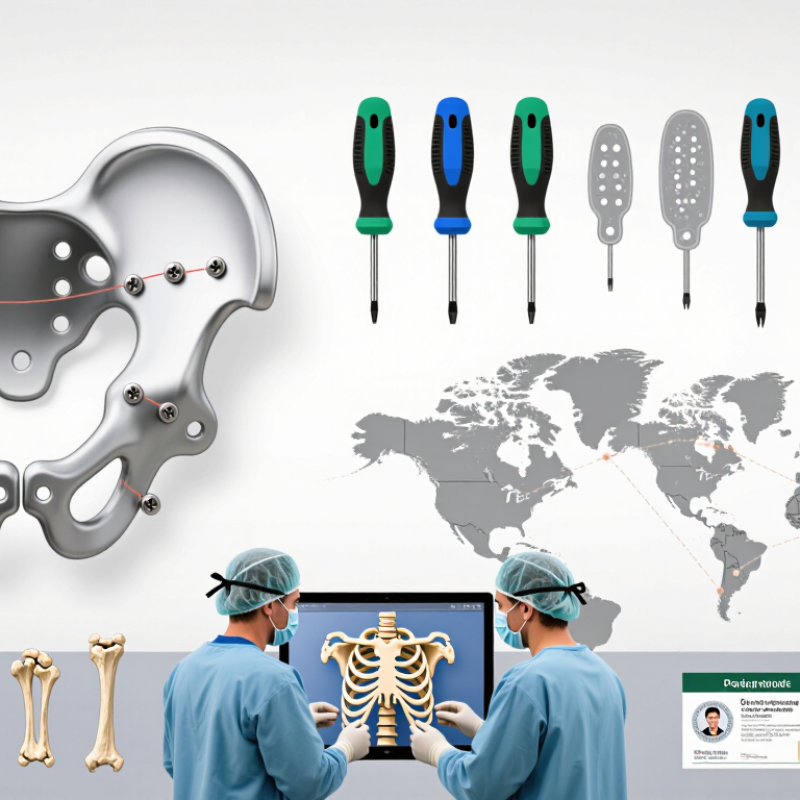
Pelvic Anatomy and Injury Patterns: Pelvic Fractures Account for About 3% of Fractures
2026 Best Pelvic Plating System for Global Buyers?
Pelvic fractures account for about 3% of all fractures, according to widely cited orthopedic epidemiology reviews. Court-Brown and Caesar’s Injury review reported that pelvic injuries often accompany high-energy trauma and multiple injuries. The Global Burden of Disease Study 2019 estimated 178 million new fractures worldwide in 2019. However, global databases classify pelvic injuries differently. Direct comparisons remain imperfect.
Pelvic anatomy explains this difficulty. The pelvis combines thick cortical bone, thin areas, neurovascular structures, and irregular surfaces. Fracture patterns may involve the pelvic ring, acetabulum, or both. A practical plating system should offer anatomically contoured plates, varied screw trajectories, and stable fixation options. Surgeons also need instruments that fit narrow surgical fields. Small details matter.
The best system is not always the largest system. It should match local trauma patterns, imaging access, sterilization capacity, and surgical training. Global buyers should review material certificates, fatigue testing, biocompatibility data, and regulatory documentation. They should also examine implant sizes and replacement-part availability. A 2024 registry analysis in Injury emphasized the value of consistent pelvic trauma classification and outcome reporting. Yet classification alone cannot guarantee good fixation. Surgeon experience, reduction quality, and postoperative care still influence results. That is the uncomfortable part. Data can guide selection, but it cannot replace judgment.
2026 Best Pelvic Plating System for Global Buyers? - Pelvic Anatomy and Injury Patterns: Pelvic Fractures Account for About 3% of Fractures
Evidence-informed comparison of pelvic anatomy, injury patterns, and practical plating-system requirements for hospital procurement and clinical evaluation.
| Evaluation Dimension | Anatomical or Clinical Data | Typical Injury Pattern | Implication for a Pelvic Plating System |
|---|---|---|---|
| Overall fracture burden | Pelvic fractures account for approximately 3% of all fractures, although the proportion varies by population, trauma definition, and data source. | High-energy trauma commonly produces unstable pelvic-ring injuries; low-energy falls can cause fragility fractures in older adults. | The system should support both temporary or definitive fixation strategies and allow surgeons to select implants according to stability, bone quality, and patient physiology. |
| Pelvic ring structure | The ring is formed by the sacrum, right and left innominate bones, the pubic symphysis, and both sacroiliac joints. | Disruption at one site may be associated with a second injury elsewhere in the ring; complete-ring instability should be actively assessed. | A comprehensive system should include implants and instruments for anterior ring fixation, posterior ring stabilization, and combined fixation when indicated. |
| Innominate bone anatomy | Each innominate bone consists of the ilium, ischium, and pubis, which meet at the acetabulum. | Fracture lines may involve the iliac wing, superior or inferior pubic ramus, anterior column, posterior column, or acetabular region. | Plates should offer region-specific shapes, contourability where appropriate, and screw trajectories that accommodate changing cortical thickness and nearby neurovascular structures. |
| Anterior pelvic ring | The pubic symphysis and pubic rami form the principal anterior ring components. | Symphyseal diastasis, parasymphyseal fractures, and pubic-ramus fractures may occur alone or with posterior ring disruption. | Useful features include precontoured symphyseal plates, multiple screw-hole options, left- and right-sided configurations, and instruments that support minimally invasive approaches where suitable. |
| Posterior pelvic ring | The sacroiliac joints and sacrum transmit load between the spine and lower limbs. | Posterior injuries include sacroiliac disruption, sacral fractures, iliac fractures, and crescent-type fracture-dislocations. | A plating portfolio should be compatible with posterior fixation principles and provide adequate implant strength, controlled contouring, and instrumentation for restricted surgical access. |
| Anteroposterior compression (APC) | APC injuries result from external rotation forces applied to the hemipelvis. | Increased symphyseal width may occur, with possible anterior and posterior ligamentous disruption in more severe injuries. | Anterior symphyseal plating may be considered for selected unstable patterns; the system should provide stable fixation while limiting soft-tissue irritation and avoiding obstruction of adjacent anatomy. |
| Lateral compression (LC) | LC injuries result from inward or internal-rotation forces. | Common findings include pubic-ramus fractures, sacral compression fractures, and impacted or rotated hemipelvic segments. | The system should support fixation of anterior and posterior components when clinically indicated, with options for variable screw placement around fracture zones. |
| Vertical shear (VS) | VS injuries involve a vertical displacement force affecting one hemipelvis. | Vertical translation may be accompanied by disruption of the posterior ring and anterior ring fractures. | Because these injuries can be highly unstable, plating components are generally evaluated as part of a broader fixation plan that may include posterior stabilization and temporary external support. |
| Combined-mechanism injury | Some injuries contain features of more than one mechanical pattern. | Mixed rotational and vertical instability may occur, particularly after high-energy collisions or falls from height. | A modular system with multiple plate geometries, screw lengths, and compatible instruments is more adaptable than a single universal plate design. |
| Fragility pelvic fractures | Older adults with osteoporosis may sustain pelvic fractures after low-energy falls, often with reduced bone density. | Fractures may involve the pubic rami, sacral ala, or multiple pelvic sites, and symptoms can be disproportionate to the apparent initial radiographic findings. | Buyer evaluation should include fixation options for compromised bone, low-profile implants, broad screw-size selection, and imaging-compatible instrumentation. |
| Acetabular relationship | The acetabulum is the hip socket and is formed by contributions from the ilium, ischium, and pubis. | Acetabular fractures are classified separately from pelvic-ring injuries, although both may coexist in complex trauma. | A pelvic plating portfolio should clearly distinguish pelvic-ring plates from acetabular plates and provide procedure-specific instrumentation to reduce selection errors. |
| Neurovascular considerations | The lumbosacral plexus, major vessels, bladder, bowel, and reproductive organs are located near pelvic fixation zones. | Displacement, hematoma, open injury, or implant malposition may increase the risk of neurological, vascular, visceral, or soft-tissue complications. | Important system attributes include controlled screw angulation, depth measurement, drill guides, radiopaque or imaging-compatible components, and clear surgical technique guidance. |
| Implant profile and soft tissue | Anterior pelvic plates are positioned near thin soft-tissue coverage and the abdominal wall. | Prominent hardware may contribute to local irritation, wound problems, or later implant removal in selected patients. | Low-profile edges, smooth transitions, appropriate plate width, and reliable contour control should be considered during product evaluation. |
| Screw strategy | Pelvic corridors vary considerably in length, width, orientation, and proximity to joints or foramina. | Incorrect screw direction or excessive length can risk intra-articular, neural, vascular, or visceral injury. | A suitable system should provide multiple screw lengths, locking or non-locking options as appropriate, depth gauges, aiming guides, and instruments that support accurate trajectory control. |
| Material and mechanical requirements | Pelvic fixation must resist bending, rotation, and cyclic loading while maintaining acceptable biocompatibility. | Mechanical demand depends on fracture instability, patient activity, bone quality, reduction quality, and the selected fixation construct. | Procurement review should confirm material specifications, mechanical testing documentation, fatigue performance, corrosion resistance, and compatibility with the intended screw family. |
| System completeness | Pelvic trauma surgery may require different approaches and implant geometries for anterior, posterior, iliac, symphyseal, and acetabular regions. | Complex injuries frequently require more than one implant type and may require intraoperative adaptation. | Global buyers should assess plate coverage, instrument availability, sterilization workflow, replacement-part supply, packaging, training materials, and regulatory documentation rather than judging a system by plate appearance alone. |
Selection note: No single pelvic plating system is universally best. Final implant selection should be based on fracture morphology, reduction goals, bone quality, surgical approach, imaging, surgeon experience, and applicable local regulatory requirements.
Reference basis: General principles are consistent with established pelvic-trauma classifications and guidance from orthopedic trauma literature, including Young–Burgess injury patterns, Tile/AO concepts, and standard pelvic and acetabular fixation principles.
FAQS
Request verified data for wrought titanium alloy, including tensile strength, proof stress, and elongation. A minimum baseline may include 860 MPa tensile strength, 795 MPa proof stress, and 10% elongation. These figures screen materials. They do not prove clinical suitability.
No. Alloy compliance evaluates the material, not the full implant system. Plate geometry, screw holes, thickness, and loading direction also affect performance. That distinction is easy to miss.
Request fixture drawings, sample numbers, load curves, and failure descriptions. The report should state whether the plate bent, cracked, or pulled from the fixture. A polished summary is not enough.
Check the cycle count and test frequency. Review the loading direction and recorded failure mode. A plate may pass a laboratory test yet perform poorly under complex pelvic loading. The gap is uncomfortable.
No. Performance depends on plate shape, thickness, screw-hole design, and test setup. A single pass number can mislead purchasing teams. Context matters more than one impressive figure.
Check official authority databases, valid certificates, approved indications, and legal manufacturer details. Do not rely only on a supplier PDF. Verify the exact product and intended use.
Confirm lot numbers, serial records, unique device identifiers, and production dates. Packaging should match shipping documents and implant labels. Also review recall, complaint, and post-market procedures. Small gaps matter.
Review the complete tray list, including reduction tools, drill guides, depth gauges, screwdrivers, and cleaning accessories. Confirm implant compatibility and sterilization-process compatibility. Check replacement timelines and maintenance records. A missing guide matters.
Yes. Their feedback may reveal awkward handles, unclear markings, or unnecessary duplicates. They can also identify workflow problems before clinical use. No checklist catches everything. That limitation deserves reflection.
Conclusion
A Pelvic Plating System is designed to support the surgical management of complex pelvic ring and acetabular fractures, which represent approximately 3% of all fractures but can involve significant instability and challenging anatomy. An effective system typically includes 3.5-mm plates, compatible screws, and locking options that allow surgeons to adapt fixation to different bone surfaces, fracture patterns, and soft-tissue considerations. Plate geometry and screw trajectories should be selected according to the specific injury, whether it involves the pelvic ring, acetabulum, or both.
For global buyers, material quality and documented testing are essential. Titanium conforming to ISO 5832-3 may provide an appropriate balance of strength, corrosion resistance, and biocompatibility, while ASTM F382 testing can help evaluate plate mechanical performance. Before purchasing, buyers should confirm regulatory status in the intended market, product traceability, manufacturing documentation, sterilization information, and the availability of complete instrument sets. Careful evaluation of these factors supports consistent surgical preparation, responsible procurement, and reliable clinical use.