Orthopedic Insights & Knowledge
Explore the latest advances in orthopedic implants, trauma solutions, surgical technology, and healthcare industry news from Auxein Medical.
How to Choose a Bipolar Hip Prosthesis in 2026?
Table of Contents
- What Is a Bipolar Hip Prosthesis and How Does It Work?
- Which Patient Factors Influence Prosthesis Selection?
- How to Compare Bipolar Hip Prosthesis Designs and Materials?
- What Surgical and Implant Compatibility Factors Should Be Evaluated?
- How to Assess Risks, Recovery, Longevity, and Follow-Up Needs?
- FAQS
- Conclusion
- Related Posts
Choosing a Bipolar Hip Prosthesis in 2026 requires more than comparing prices, materials, or catalog photographs. It demands a careful match between the patient, fracture pattern, bone quality, and expected mobility. The World Health Organization reports that osteoarthritis affected approximately 528 million people globally in 2019, increasing demand for evidence-based hip care. However, not every painful or fractured hip requires the same reconstruction.
A bipolar prosthesis is commonly considered for displaced femoral neck fractures, especially among older adults with limited pre-injury activity. Its inner and outer articulation may reduce acetabular contact compared with a traditional unipolar design. Yet this benefit is not guaranteed. The American Academy of Orthopaedic Surgeons’ clinical guidance emphasizes patient selection, surgical technique, and shared decision-making rather than one universal implant choice. The American Joint Replacement Registry’s annual reports also show why registry surveillance matters. Revision patterns can reveal performance differences that short clinical studies miss.
Look beyond the label.
In practice, surgeons should review femoral anatomy, acetabular condition, osteoporosis, fall risk, cognitive status, and rehabilitation access. Cemented fixation may offer advantages for selected older patients with fragile bone, while uncemented fixation can suit other anatomical and clinical situations. The Australian Orthopaedic Association National Joint Replacement Registry reports provide useful long-term revision data, but registry results still require clinical interpretation. Hospital experience, implant availability, and emergency surgical timing may influence the final decision.
No report replaces examination. A sound choice combines published evidence, registry data, surgeon experience, and the patient’s daily goals. That balance is sometimes imperfect, but transparent discussion is safer than promising a single “best” prosthesis.
What Is a Bipolar Hip Prosthesis and How Does It Work?
How to Choose a Bipolar Hip Prosthesis in 2026?
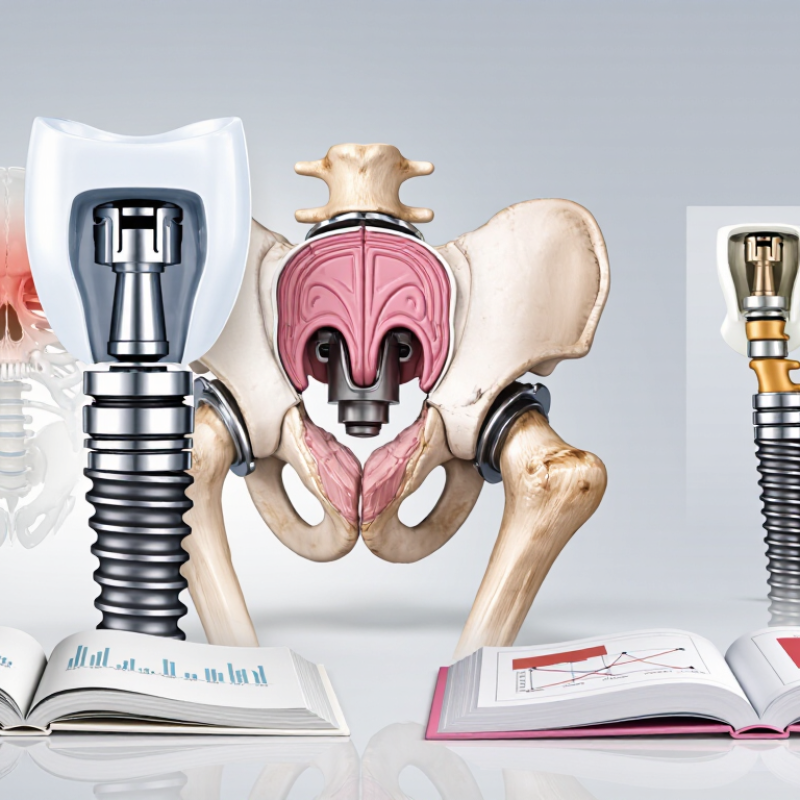
A bipolar hip prosthesis replaces the damaged femoral head and neck. It is commonly used in selected hip fractures and other serious joint conditions. Unlike a simple hemiarthroplasty, it has two moving surfaces. The inner head moves inside an outer shell. The outer shell moves against the patient’s natural acetabulum, or hip socket. This design can distribute movement across two interfaces. It may reduce direct stress on the socket during everyday motion. Still, it does not recreate a healthy hip perfectly.
During surgery, the damaged femoral head is removed. The surgeon prepares the femoral canal and inserts the stem. A modular head then connects to the stem. Stability depends on accurate sizing, bone quality, soft-tissue balance, and surgical technique. Patient activity matters too. A physically active person may need different advice than someone with limited mobility. Clinical evidence guides decisions, but individual anatomy can complicate the plan.
Tips: Ask how the implant will fit your anatomy. Discuss bone density, walking goals, and possible socket wear. Ask which movements may be restricted during recovery. Do not judge an implant by its name alone. A smaller head is not always better. A larger one is not automatically safer. Your surgeon should explain the reasoning in clear terms, including uncertainties and possible complications. Recovery can feel uneven. That is normal, but new severe pain, fever, or sudden leg shortening needs prompt medical attention.
Which Patient Factors Influence Prosthesis Selection?
How to Choose a Bipolar Hip Prosthesis in 2026?
Choosing a bipolar hip prosthesis starts with the patient, not the implant catalogue. Age matters, but it should not decide alone. A healthy 72-year-old may need a different solution from a frail 68-year-old. For many displaced femoral-neck fractures, surgeons also assess walking ability, home environment, and expected survival. An outdoor walker places different demands on the hip. Someone with limited mobility may value pain relief and simpler rehabilitation more.
Bone quality is central. Osteoporosis can reduce fixation strength and increase fracture risk during surgery. The surgeon should review radiographs, fracture pattern, femoral canal shape, and bone density when appropriate. Acetabular cartilage matters too. Bipolar movement does not remove all stress from the native socket. Pre-existing arthritis may make another reconstruction more suitable. Weak abductor muscles, spinal stiffness, or previous hip surgery can alter stability and gait.
Medical and cognitive factors deserve equal attention. Heart disease, kidney problems, anticoagulant use, and infection risks may change timing or rehabilitation. Memory impairment and repeated falls can affect aftercare. Family support is practical evidence, not a minor detail. Can the patient follow weight-bearing instructions? Will someone help during the first week? Shared decision-making should include expected function and the surgeon’s experience. No checklist is perfect. A clear X-ray can still hide fragile bone or unrealistic goals. Reassessment is often wiser than choosing quickly.
How to Choose a Bipolar Hip Prosthesis in 2026?
Which Patient Factors Influence Prosthesis Selection?
Patient-specific selection usually considers fracture pattern, acetabular condition, bone quality, functional demand, cognitive status, medical fitness, instability risk, and expected longevity. The relative scores below are an educational clinical-priority framework, not a validated prediction model or a substitute for surgeon assessment.
Scale: 1 = lower influence, 5 = higher influence. Bipolar hemiarthroplasty is generally considered when the femoral head and neck are damaged but the acetabulum is suitable for hemiarthroplasty; significant acetabular disease or high functional demand may support consideration of total hip arthroplasty instead.
How to Compare Bipolar Hip Prosthesis Designs and Materials?
How to Choose a Bipolar Hip Prosthesis in 2026?
Comparing bipolar hip prosthesis designs requires more than checking catalog measurements. A bipolar system has an inner articulation and an outer shell, allowing movement at two interfaces. Review the shell diameter, liner thickness, head size, and locking mechanism. These details influence stability, range of motion, and potential wear. A larger head may improve stability, but it can increase material demands and soft-tissue irritation.
Material selection deserves careful attention. Metal-on-polyethylene designs remain widely used, while ceramic components may offer favorable wear characteristics in selected cases. Ceramic can be less forgiving of impact or handling errors. Metal components may provide strength, yet corrosion and tissue reactions require consideration. Fixation is equally important. Cemented stems can provide immediate fixation in some patients, while porous, uncemented surfaces depend on bone growth. Patient age, bone quality, activity level, anatomy, and surgical experience should guide the comparison. No material wins in every case.
Tips: Compare complete systems, not isolated parts. Check compatibility between the shell, liner, head, and stem. Ask for published clinical data, retrieval findings, and independent testing. Measure radiographs carefully. Small dimensional differences matter. I would not rely on laboratory wear results alone; real patients move unevenly, fall, and heal differently. Discuss likely revision options with the orthopedic surgeon, especially when bone quality is poor or anatomy is unusual. A clear decision should combine evidence, surgical judgment, and the patient’s daily needs.
What Surgical and Implant Compatibility Factors Should Be Evaluated?
Choosing a bipolar hip prosthesis in 2026 requires more than comparing implant sizes. The surgical plan must match the patient’s anatomy, bone quality, age, activity level, and fracture pattern. Recent radiographs and, when needed, CT images help the surgeon assess the femoral canal and acetabular shape. Small differences matter.
Implant compatibility begins with the femoral stem. Its length, offset, neck geometry, and fixation method should support stable reconstruction without excessive bone removal. Cemented fixation may suit fragile bone, while uncemented fixation can be considered when bone quality supports biological growth.
The surgeon must also confirm compatibility between the stem, bipolar head, taper, and available trial components. A mismatch can affect stability, leg length, or movement.
Surgical instruments deserve equal attention. The operating team needs compatible broaches, trial heads, extraction tools, and backup sizes. The implant should allow controlled adjustment of offset and leg length during surgery. Soft-tissue tension must be checked, not assumed from imaging alone.
Even careful planning can miss unexpected anatomy. That possibility should shape the consent discussion and backup plan.
I would also question whether a bipolar design remains appropriate when the acetabulum shows significant wear or when long-term activity demands are high. These decisions require documented clinical judgment, current evidence, and direct discussion among the surgeon, patient, and implant team.
How to Assess Risks, Recovery, Longevity, and Follow-Up Needs?
Choosing a bipolar hip prosthesis in 2026 should begin with your health, not a product label. An orthopedic surgeon should review your fracture pattern, bone quality, walking ability, age, and medical conditions. Imaging helps determine whether the implant can fit securely. Ask how each option may affect stability, pain, and movement.
Risks include infection, blood clots, dislocation, leg-length differences, loosening, and nerve injury. Recovery usually involves early movement, wound monitoring, and guided physiotherapy. Short walks help. Progress varies widely. Some patients regain confidence within weeks, while others need several months. A realistic plan should include pain control, home support, fall prevention, and clear warning signs.
Longevity depends on implant fixation, body weight, activity, bone health, and surgical technique. Published evidence can guide decisions, but it cannot predict one person’s result. I would ask for registry data, complication rates, and the surgeon’s experience with similar cases. A second opinion may reveal concerns you missed. Follow-up may include early wound checks, later X-rays, and reviews when pain or function changes. No checklist is perfect. Even careful selection cannot remove uncertainty.
FAQS
It replaces the damaged femoral head and neck. It has two moving surfaces. An inner head moves inside an outer shell. The shell moves against the natural hip socket. It does not perfectly copy a healthy hip.
Movement occurs between the inner head and outer shell. Additional movement occurs between the shell and the natural socket. This may reduce direct stress on the socket during daily activities. The benefit varies between patients. It is not guaranteed.
It may suit selected patients with serious hip fractures or joint damage. The decision depends on anatomy, bone quality, age, and activity level. The fracture pattern also matters. Significant socket wear may change the plan. High activity demands need careful discussion.
Review shell diameter, liner thickness, head size, and locking features. Stem length, offset, neck shape, and fixation method also matter. A larger head may improve stability. It may also increase material demands or soft-tissue irritation. Bigger is not automatically safer.
Metal and polyethylene combinations are commonly used. Ceramic components may offer favorable wear in selected situations. Ceramic can be less forgiving after impact or handling errors. Metal may provide strength, but tissue reactions require consideration. No material wins every case.
Cemented stems can provide immediate fixation in some patients. They may suit fragile or weaker bone. Uncemented stems depend on bone growth into porous surfaces. They may suit patients with adequate bone quality. The choice is individual.
Recent radiographs help assess the femoral canal and hip socket. CT imaging may clarify unusual anatomy. The stem, bipolar head, taper, and trial components must fit together. Compatible broaches and extraction tools should be available. Small differences matter.
Ask how the prosthesis will fit your anatomy. Discuss bone density, walking goals, socket wear, and revision options. Ask which movements may be restricted during recovery. Request a clear explanation of uncertainties and possible complications. Bring a written list.
Recovery can feel uneven. New severe pain, fever, or sudden leg shortening needs prompt medical attention. A sudden change in walking also deserves medical review. Do not assume every symptom is normal. I would rather ask too early.
Conclusion
Choosing a Bipolar Hip Prosthesis in 2026 requires a balanced assessment of the implant, the patient, and the surgical plan. A bipolar design uses an inner bearing within an outer shell to provide movement and reduce stress on the acetabulum, making it commonly considered for selected hip fractures and other conditions. Patient age, bone quality, activity level, joint anatomy, existing health problems, and expected rehabilitation capacity can all influence whether this option is appropriate.
Evaluation should also include the prosthesis’s structure, bearing materials, fixation method, stem geometry, and compatibility with the patient’s anatomy and surgical technique. Surgeons should compare stability, range of motion, wear potential, fracture risk, and the likelihood of conversion to another procedure. Patients should receive clear guidance about possible complications, pain control, weight-bearing limits, physical therapy, and warning signs during recovery. Long-term success depends on appropriate selection, accurate implantation, regular follow-up, and monitoring for loosening, dislocation, infection, or changing joint function.

Blog Tags: