Orthopedic Insights & Knowledge
Explore the latest advances in orthopedic implants, trauma solutions, surgical technology, and healthcare industry news from Auxein Medical.
What Is an Austin Moore Hip Prosthesis?
Table of Contents
- Definition and Historical Development of the Austin Moore Hip Prosthesis
- Design, Components, and Materials of the Prosthesis
- Medical Conditions Treated with an Austin Moore Hip Prosthesis
- Surgical Placement and Functional Principles
- Benefits, Risks, and Long-Term Patient Outcomes
- FAQS
- Conclusion
- Related Posts
An Austin Moore Hip Prosthesis is a historically important partial hip replacement device. It was developed by American orthopaedic surgeon Austin T. Moore and became widely used for selected femoral neck fractures. The design usually includes a metal femoral stem and a fenestrated head. The openings were intended to encourage bone growth around the implant. This detail matters. It shows how early hip surgery connected mechanical support with biological healing.
Austin T. Moore’s work is often associated with the principle, “A prosthesis should restore movement while respecting the patient’s anatomy.” This statement reflects the clinical purpose behind the device, although historical records may not preserve his wording consistently. Modern orthopaedic specialists would describe the same goal more precisely: reduce pain, restore mobility, and select an implant that matches the patient’s bone quality, activity level, and fracture pattern.
The Austin Moore Hip Prosthesis is not suitable for every patient. Surgeons now compare it with bipolar hemiarthroplasty and total hip replacement. They examine acetabular cartilage, femoral anatomy, age, mobility, and medical risk. A loose stem, acetabular wear, infection, or dislocation can seriously affect recovery. The implant may look simple on an X-ray. The decision is not simple.
Its historical value remains significant. However, older designs should not be judged without context. Surgical training, materials, fixation methods, and rehabilitation have changed. A careful explanation must acknowledge both achievements and limitations. For patients and families, expert assessment remains essential before choosing any hip prosthesis.
Definition and Historical Development of the Austin Moore Hip Prosthesis
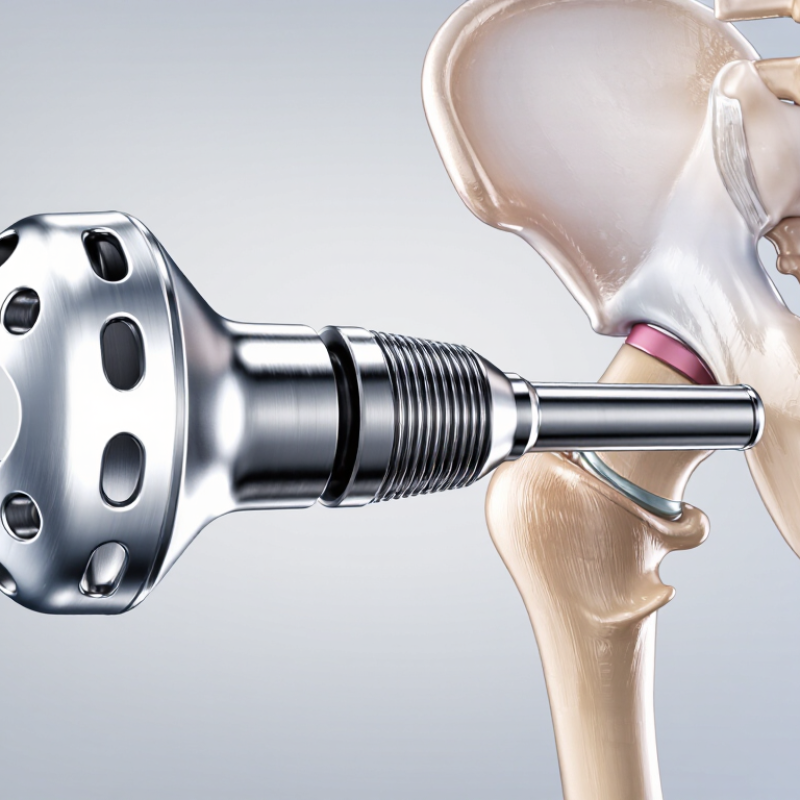
The Austin Moore hip prosthesis is a femoral-head implant used mainly for hip hemiarthroplasty. It replaces the damaged femoral head while preserving the patient’s natural acetabulum. Its design includes a fenestrated stem, allowing bone growth through openings and supporting biological fixation. Older versions often used cementless fixation. Surgical teams valued its relatively simple insertion and predictable geometry.
Its historical development began in the mid-twentieth century, when surgeons sought faster treatment for displaced femoral-neck fractures. Early models reflected the limits of available metals, imaging, and fixation science. Later improvements refined stem shape, surface finish, and sizing. The evolution was practical, not perfectly linear. Some early assumptions about long-term stability proved incomplete.
Modern registry data explains this changing role. The UK National Joint Registry’s 21st Annual Report, published in 2024, recorded more than 200,000 hip and knee procedures in one reporting year. Hip-fracture care remains a major workload, especially among older adults. However, registry evidence also shows that outcomes depend on age, fracture pattern, implant selection, surgical approach, and patient health. The Austin Moore prosthesis may still suit selected cases, but it is not automatically appropriate for every fracture. The report’s strength is scale; its limitation is detail, because registry data cannot capture every clinical decision or patient preference.
Design, Components, and Materials of the Prosthesis
What Is an Austin Moore Hip Prosthesis?
The Austin Moore hip prosthesis is a partial hip replacement device. It replaces the damaged femoral head and neck after selected femoral neck fractures. Unlike a total hip replacement, it usually does not replace the natural acetabulum. The design is relatively simple, but its clinical role requires careful patient selection.
Its main components include a rounded femoral head, a short neck, and a metal stem. A collar may rest against the cut surface of the femur. Many traditional designs include a fenestration, or opening, near the stem. Bone can grow around this area and improve long-term stability, although results vary between patients. The stem is commonly made from stainless steel or cobalt-chromium alloy. These metals offer strength, wear resistance, and reasonable biocompatibility. Material choice can differ by model and manufacturing period.
The prosthesis is inserted into the femoral canal after the damaged head is removed. The surgeon checks leg length, hip movement, and joint stability during the procedure. A precise fit matters. A loose stem can cause pain, while an oversized component may damage bone. Age, activity level, bone quality, and acetabular condition all influence the decision. The design is not ideal for every fracture. In active patients, contact between the metal head and natural socket may gradually produce cartilage wear. That limitation deserves honest attention, because a mechanically simple implant is not automatically a universally suitable one.
Medical Conditions Treated with an Austin Moore Hip Prosthesis
An Austin Moore hip prosthesis is a type of partial hip replacement. It replaces the damaged femoral head while preserving the patient’s natural acetabulum. Doctors most often consider it for displaced intracapsular femoral neck fractures. These injuries commonly occur after a fall in older adults with fragile bones. The fracture may cause severe groin pain, leg shortening, and an inability to stand.
This prosthesis may also help selected patients with femoral head destruction. Possible causes include certain pathological fractures, advanced bone damage, or failed internal fixation. The surrounding hip socket should remain reasonably healthy. Otherwise, a total hip replacement may provide better long-term function. Patient age, mobility, bone quality, medical conditions, and expected activity level all influence the decision.
The treatment choice is rarely simple. A low-demand patient may benefit from a shorter operation and a stable replacement. A younger or highly active patient may need another surgical approach. The surgeon must also assess infection risk, dislocation risk, and the condition of nearby muscles. Recovery usually includes pain control, walking practice, and carefully planned rehabilitation.
It is not suitable for everyone. This matters. Implant selection should follow imaging, physical examination, and a patient-specific surgical review. Evidence and local practice can differ, so assumptions may lead to poor outcomes. Moreover, even a technically successful procedure may not restore the patient’s previous walking ability.
What Is an Austin Moore Hip Prosthesis?
An Austin Moore prosthesis is a unipolar hip implant historically used to replace the femoral head, especially in older adults with displaced intracapsular femoral neck fractures. The chart shows approximate proportions of major hip-fracture patterns reported in clinical literature; the femoral neck category is the fracture pattern most closely associated with this prosthesis. It may also be considered in selected cases of femoral-head osteonecrosis or pathological fracture, although modern treatment is individualized.
Surgical Placement and Functional Principles
What Is an Austin Moore Hip Prosthesis?
Surgical Placement and Functional Principles
An Austin Moore prosthesis is a unipolar hemiarthroplasty implant. It replaces the fractured femoral head, not the entire hip joint. Its metal head moves directly against the patient’s natural acetabulum. This preserves the socket and usually shortens surgery.
During placement, the surgeon exposes the hip and removes the damaged femoral head. The femoral canal is opened and shaped with rasps. The selected stem must fill the canal without forcing it. The surgeon then checks leg length, offset, stability, and range of motion. A small mismatch can cause limp, pain, or instability. The word “simple” can mislead.
The prosthesis transfers body weight from the pelvis through the artificial head and stem. Its fenestrated design was intended to encourage bone growth around the stem. However, fixation quality depends on bone density, canal shape, surgical technique, and postoperative loading.
The International Osteoporosis Foundation estimates about 1.6 million hip fractures occur worldwide each year, with the total potentially reaching 4.5 million by 2050. This makes reliable fracture treatment increasingly important.
Current guidance requires careful patient selection. NICE guideline NG124 recommends arthroplasty for many displaced intracapsular fractures and generally favors cemented implants. Therefore, an Austin Moore device may not suit every patient. Possible concerns include acetabular wear, loosening, infection, periprosthetic fracture, and dislocation. Clinical judgment still matters. Data support decisions, but they cannot replace an assessment of mobility, cognition, bone quality, and expected recovery.
Benefits, Risks, and Long-Term Patient Outcomes
What Is an Austin Moore Hip Prosthesis?
An Austin Moore hip prosthesis is a partial hip replacement used mainly after certain femoral neck fractures. It replaces the damaged femoral head while preserving the patient’s natural acetabulum. Surgeons may consider it for older adults with limited mobility or serious medical frailty. The implant’s fenestrated stem allows bone growth around the prosthesis, although fixation quality depends on bone strength and surgical technique.
Benefits, Risks, and Long-Term Patient Outcomes
The main benefit is practical: pain may decrease, and standing can begin sooner after surgery. Earlier movement may reduce complications linked to prolonged bed rest, such as chest infections or blood clots. The operation is also generally less extensive than total hip replacement. Still, it is not a perfect solution.
Possible risks include infection, dislocation, leg-length difference, periprosthetic fracture, loosening, and persistent thigh pain. Over time, the metal head can wear the acetabulum, causing groin pain and reduced walking ability. Some patients later need conversion to a total hip replacement.
Long-term outcomes vary widely. Age, bone density, balance, rehabilitation, and existing heart or lung disease all matter. Clinical follow-up should include walking ability, pain levels, imaging, and daily function. Evidence from older implant series is sometimes uneven, so historical success rates should not be treated as personal predictions. A careful discussion with an orthopedic surgeon remains essential.
FAQS
It replaces the damaged femoral head and neck. The natural hip socket usually remains. It is a partial hip replacement.
Surgeons may consider it for selected displaced femoral-neck fractures. Patient age, bone quality, activity level, and socket condition matter. It is not suitable for every fracture.
The device has a rounded metal head, a short neck, and a stem. Some designs include a collar and a stem opening. The opening may support bone growth.
Traditional versions commonly use stainless steel or cobalt-chromium alloys. These metals provide strength and wear resistance. Materials can vary by model and production period.
The surgeon removes the damaged femoral head first. The stem then enters the femoral canal. The team checks leg length, movement, and joint stability.
A loose stem can cause pain and poor stability. An oversized stem may damage the femur. Small sizing errors can matter.
It normally replaces only the femoral side. A total replacement also replaces the natural socket. Keeping the socket can simplify the operation, but cartilage wear remains possible.
Metal contact with the natural socket may gradually wear cartilage. Active patients may face greater concern. The simple design is not automatically the best choice.
Registry data shows that outcomes depend on several factors. These include age, fracture pattern, implant choice, surgical approach, and general health. Large records help, but they miss personal decisions and preferences.
Yes. Later versions refined stem shape, surface finish, and sizing. Progress was not perfectly linear. Earlier beliefs about long-term stability were sometimes incomplete.
Conclusion
An Austin Moore Hip Prosthesis is a type of partial hip replacement historically developed to restore mobility after serious damage to the femoral head and neck. Its design generally includes a metal femoral component with a rounded head, a stem inserted into the thigh bone, and openings that may support bone growth and stabilization. Materials and structure are selected to provide strength, durability, and functional movement within the hip joint.
This prosthesis may be used for certain femoral neck fractures, particularly in older or less active patients whose hip joint is otherwise suitable for partial replacement. During surgery, the damaged femoral head is removed, the prosthesis is positioned inside the femur, and the artificial head is placed against the natural socket. Potential benefits include pain reduction and improved mobility, while risks may include infection, dislocation, loosening, fracture, or ongoing discomfort. Long-term outcomes depend on patient health, bone quality, rehabilitation, and appropriate follow-up care.

Blog Tags: